

Starting a print-on-demand business is relatively easy. Starting one that survives past the first burst of enthusiasm is harder. The basic model is simple: products are made only after a customer buys them, while a third-party supplier handles printing and shipping. That keeps inventory risk low, but it also means pricing, fulfillment, and positioning matter more than many beginners realize. (shopify.com)
- Validate a niche, a product, and a workable margin before spending time on branding. Low inventory does not mean low business risk. (shopify.com)
- Choose the first sales channel based on how customers will find the store. Etsy is a marketplace with built-in shopper demand and platform rules; Shopify gives more control through a standalone storefront and POD app integrations. (help.etsy.com)
- Build a small starter catalog, use print-ready files, and order samples before pushing traffic. Print quality, shipping setup, and real-world product photos affect conversion. (support.printful.com)
- Price from the bottom up. Production cost, shipping, marketplace fees, payment processing, samples, and marketing can erase profit faster than beginners expect. (help.printify.com)
Understand the business model before you open a store
Print-on-demand is best understood as an ecommerce fulfillment model, not a shortcut to easy passive income. A supplier such as Printful or Printify can connect to a store, receive the order after checkout, produce the item, and ship it directly to the customer. That removes the need to pre-buy inventory, but it does not remove customer service, product selection, quality control, or tax and bookkeeping responsibilities. (help.printful.com)
This matters because beginners often treat POD like a design-upload game. The businesses that last usually operate more like merchants. They choose a customer, build an offer around that customer, protect margin, and make fulfillment boring and reliable. Store design matters, but it comes after the offer makes sense.
Use the niche-product-margin check before you build anything
A useful way to avoid a weak launch is to run every idea through a simple three-part filter: niche, product, and margin. It is not an industry standard. It is a practical editorial check meant to stop the most common beginner mistake, which is building a store around products the seller likes instead of products a specific group is likely to buy.
- Niche: Can the target customer be described clearly in one sentence? “People who like funny shirts” is too broad. “High school marching band parents shopping for end-of-season gifts” is much stronger because it points to a buyer, an identity, and a buying moment.
- Product: Does the item fit the use case? T-shirts work for identity and fandom. Mugs and posters often work better for gifting. Tote bags or notebooks can make more sense for clubs, teachers, conferences, or event merch.
- Margin: After product cost, shipping, marketplace fees, payment processing, samples, refunds, and likely ad spend, is there enough left to grow? Printify explicitly separates production cost from shipping cost and recommends keeping at least a 40% profit margin as a growth guideline. (help.printify.com)
If one side of that check is weak, fix the offer before choosing colors, logos, or a domain name. A mediocre design with a sharp niche and sane economics usually has a better future than a polished store built around generic ideas.
Choose your first sales channel strategically
The first big decision is not supplier. It is channel. For most beginners, the practical choice is between starting on a marketplace such as Etsy, starting with a standalone Shopify store, or using a hybrid approach later. Etsy provides a selling environment, fees, policies, and built-in shopper traffic; Shopify provides a storefront you control and lets you connect POD apps directly. (help.etsy.com)
| Channel | Best fit | Main strengths | Main tradeoffs |
|---|---|---|---|
| Etsy | A beginner who wants to test demand quickly inside an existing marketplace. (help.etsy.com) | Faster setup, existing shopper demand, and direct connection options with POD tools such as Printful. (help.etsy.com) | You follow marketplace rules and fees. Etsy sellers are responsible for complying with applicable laws, labels, and warnings, and selling fees apply. (etsy.com) |
| Shopify | A seller who wants a branded storefront and expects to drive traffic through content, email, or ads. (shopify.com) | More brand control, direct store ownership, and app-based POD integrations. (shopify.com) | You are more responsible for generating traffic and configuring store operations such as shipping and merchandising. |
| Hybrid later | A seller who wants early marketplace validation and a branded store once the offer proves itself. | Lets one channel test demand while the other builds a longer-term brand asset. | More operational complexity, duplicate product management, and more room for pricing or shipping mistakes if systems are sloppy. |
A workable rule: start on Etsy if the main problem is proving that people will buy. Start on Shopify if the main advantage is an audience you already reach elsewhere, such as a newsletter, content channel, community, or local brand partnerships. If neither exists, solve the audience problem first rather than assuming the store itself will create demand.
Handle the boring business setup early
Before the first listing goes live, choose a basic business structure and separate the business mentally and financially from personal spending. The SBA says a sole proprietorship is the default if someone does business activities without registering as another entity, while an LLC can provide personal liability protection in many situations. That is a business and legal decision, not just a branding decision, and state-specific advice can matter. (sba.gov)
An EIN is free from the IRS and may be required depending on the entity type or tax situation; even when not strictly required for a sole proprietor, some owners get one for banking or administrative reasons. The IRS also emphasizes recordkeeping from the start. Keep clean records for supplier charges, sales-channel fees, sample orders, software, refunds, and ad spend. That matters for taxes and for understanding whether the business is actually working. (irs.gov)
Do a name check before you fall in love with the brand. The SBA recommends checking your planned business, product, and service names against the USPTO trademark database. Also remember that trademark and copyright are different: trademarks identify the source of goods or services, while copyright protects original creative works. Those differences matter when the business is built around names, phrases, artwork, and graphics. (sba.gov)
Marketplace selling does not shift legal responsibility away from the seller. Etsy’s seller policy states that sellers are responsible for complying with applicable laws and regulations for listed products, including required labels and warnings. If a product category involves children’s items, safety claims, cosmetics, supplements, or other regulated issues, get professional guidance before listing. (etsy.com)
Pick a print provider by operations, not by hype
Catalog size is seductive, but it should not be the first filter. The better test is operational fit: how the provider integrates with the store, how predictable fulfillment is, what shipping options exist, and whether the economics work for the planned customer. Printful and Printify both support major ecommerce integrations, but the right choice depends on the products, regions, shipping setup, and workflow the business actually needs. (support.printful.com)
- Integration quality: Make sure orders, product variants, and shipping settings sync cleanly with the chosen channel. Shopify and Etsy both have direct setup paths with major POD tools. (help.printful.com)
- Shipping logic: Shipping is not usually included in the base product cost. Printify states that shipping cost varies by product, provider, method, and destination, so pricing decisions should account for the actual shipping setup. (help.printify.com)
- Profit control: A supplier may let you set your own retail price, but that does not mean the margin is healthy. Check variant-level costs, larger sizes, extra print areas, and the effect of free shipping. Printify’s pricing tools explicitly surface production cost, shipping cost, and profit margin. (help.printify.com)
- Sample testing: Order samples before scaling. Printify’s sample-order guidance frames samples as a way to verify the finished product and print quality before selling. (help.printify.com)
A small store can run well with one primary provider and a short list of products. That is often better than splitting early across too many vendors and creating customer-service problems around shipping speeds, packaging differences, or out-of-stock blanks.
Build print-ready files and a small starter catalog
Design quality problems usually appear after the sale, which makes them expensive. Printful’s current file guidance says it supports JPEG, PNG, and SVG files, with a recommended 300 DPI for JPEG and PNG in many cases, while some larger print files may accept lower resolution depending on the product. The important part is not memorizing a universal number. It is following the template and file requirements for each specific item. (support.printful.com)
- Design to the real print area, not a social-media crop. Scaling a small file up later can cause blur or pixelation. (help.printful.com)
- Use full-bleed files where the product requires edge-to-edge coverage. (printful.com)
- Save in sRGB so the on-screen and printed appearance are more likely to stay aligned. (printful.com)
- Treat transparent backgrounds and placement as production choices, not afterthoughts. Product templates exist for a reason. (support.printful.com)
For the first launch, keep the catalog narrow. One niche, one or two core product types, and a handful of tightly related designs is enough. A common beginner move is launching fifty disconnected products. That usually creates a weak brand, uneven pricing, and too many variables to diagnose when sales are slow.
A hypothetical example: a seller targeting birdwatchers could begin with one apparel item, one mug, and six to ten designs built around species-specific humor, field-season gifts, or club identity. That is easier to price, photograph, test, and improve than a store trying to sell dog shirts, wedding tote bags, gamer hoodies, and nursery prints all at once.

Price from the bottom up, not by copying competitors
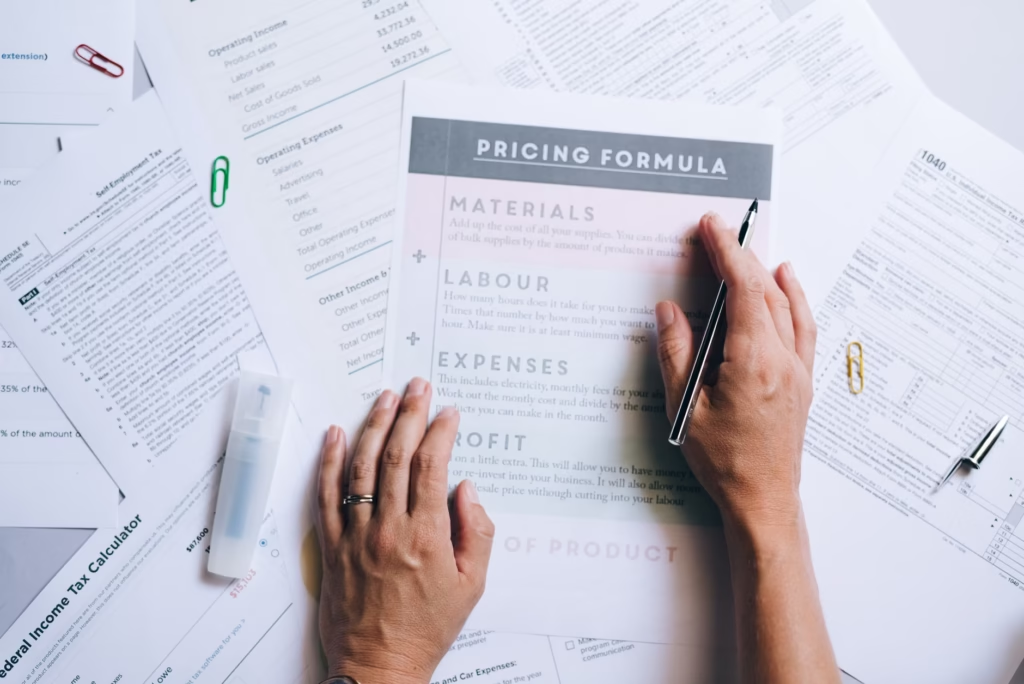
This is where many POD stores quietly fail. The relevant number is not revenue per sale. It is the contribution left after the full stack of costs. On Etsy, sellers may face a one-time setup fee that varies by location, a $0.20 listing fee, a 6.5% transaction fee, and payment-processing fees that vary by country. Printify also notes that shipping is separate from product cost and that sales-channel fees and taxes should be considered when setting retail prices. (help.etsy.com)
- Start with the full landed cost to you: base product, decoration charges if any, and shipping. (help.printify.com)
- Add channel costs: listing fees, transaction fees, payment processing, and any store subscription or app costs that apply. (help.etsy.com)
- Reserve room for non-obvious costs such as sample orders, replacements, discounts, and ad spend.
- Set a target margin before launch rather than after the store struggles. Printify recommends at least a 40% profit margin as a practical benchmark for growth. (help.printify.com)
- Check the final price against the value of the offer, not just competitor sticker prices. If the price feels too high, the answer may be a different product, a sharper niche, or a different provider rather than a thinner margin.
In practice, niche relevance is often what protects margin. A generic slogan tee gets compared on price. A well-positioned gift for a distinct community gets compared on meaning. That does not remove price sensitivity, but it does give the business a better reason to exist than “this also comes in black.”
Order samples and test the customer experience
Before sending real traffic, order at least a few samples and place at least one full test order as if you were a customer. Printify says samples are meant to help merchants check the finished product and print quality before offering it to customers. Shipping options and rates can also differ by provider, channel, and destination, which is another reason to test instead of assume. (help.printify.com)
- Inspect print sharpness, alignment, and color on the actual blank, not just on a mockup.
- Check garment feel, sizing expectations, mug weight, or material quality depending on the item.
- Review packaging, tracking speed, and how the order confirmation and delivery experience feel from the customer side.
- Take your own product photos once samples arrive. Real photos often outperform generic mockups because they look less interchangeable.
- Update descriptions, size guidance, and FAQs based on what the sample reveals.
This is also the right moment to write policies in plain English: shipping expectations, personalization rules, replacement situations, and support contact information. If selling on a marketplace, the store still has to operate within that marketplace’s seller policies and customer-service expectations. (etsy.com)
Launch small, then improve from real data
The first launch should be treated like a test, not a graduation ceremony. Publish the strongest products first, not every idea. Then watch what customers actually do. Which listings get clicks? Which products get saved but not purchased? Which variants create complaints, low margin, or slow shipping? A small catalog makes those signals easier to read.
- Watch conversion by product, not just total store traffic.
- Track margin by SKU after fees and shipping, not only gross sales.
- Look for operational warnings such as delivery complaints, sizing confusion, or repeated print issues.
- Improve one variable at a time: mockups, titles, pricing, provider, or product mix.
A useful early goal is not scale. It is clarity. By the end of the first month, the business should know which niche messages attract attention, which products deserve more investment, and which ideas should be cut before they absorb more time.
Mistakes that waste the first six months
- Choosing a niche based only on personal interest, with no obvious buying occasion or community identity.
- Copying logos, movie references, song lyrics, mascots, or popular graphics and assuming small edits make them safe. Trademark and copyright are different rights, and both can matter in POD. (prod-web-alb-tg.uspto.gov)
- Uploading low-resolution files and hoping the printer fixes them. Print providers publish product-specific file requirements for a reason. (support.printful.com)
- Ignoring shipping setup and then discovering too late that shipping costs or timelines break the offer. Printify notes that rates vary by provider, method, and destination. (help.printify.com)
- Pricing based on competitors’ sticker prices without accounting for platform fees, shipping, and the seller’s actual margin. (help.etsy.com)
- Starting with categories that trigger more policy, labeling, or compliance complexity than a new store is ready to manage. Marketplace sellers remain responsible for compliance. (etsy.com)
Used well, print-on-demand is a low-risk way to test a product idea, a niche, or a brand concept because goods are produced after purchase rather than stocked in advance. That advantage is real. It works best when the store owner uses it to learn quickly, not to postpone decisions about positioning, economics, or operations. (shopify.com)
A workable first-month action plan
- Choose one niche with a clear buying reason.
- Select one sales channel for the initial test.
- Pick one primary provider and two to four products at most.
- Create six to twelve print-ready designs using product templates. (support.printful.com)
- Set pricing only after shipping and channel fees are included. (help.printify.com)
- Open the business cleanly enough to keep records, banking, and taxes organized from day one. (irs.gov)
- Order samples, take real photos, and tighten descriptions. (help.printify.com)
- Launch narrow, study the first signals, and expand only after one product line proves demand.
A print-on-demand business does not need to start big. It needs to start coherent. Pick a customer, offer them something specific, make the economics honest, and treat fulfillment as part of the product. That is the step-by-step path that gives a small POD shop a real chance to become a business instead of a pile of mockups.
FAQ
Do I need an LLC to start a print-on-demand business?
Not necessarily. The SBA explains that a sole proprietorship is the default when someone does business without registering another entity, while an LLC can offer personal liability protection in many situations. The right choice depends on state law, risk tolerance, taxes, and banking needs, so it is worth checking with an attorney or accountant for situation-specific advice. (sba.gov)
Is Etsy or Shopify better for beginners?
It depends on the first problem being solved. Etsy can be easier for testing demand inside a marketplace, while Shopify is stronger for building a standalone brand with direct store control and POD app integrations. Both have official setup paths for POD, but the traffic strategy is different. (help.etsy.com)
How much money does it take to start?
A lean launch can be relatively inexpensive because many POD suppliers are free to start and products are produced only after purchase. But startup costs still may include marketplace setup and listing fees, a store subscription, samples, design tools, a domain, and early marketing. For example, Etsy currently describes a one-time setup fee that varies by location plus listing and transaction fees, while Printful and Printify both offer entry paths without mandatory upfront inventory purchases. (help.etsy.com)
Can I use famous quotes, logos, or fan art if I redraw them?
Assume no unless you have the rights. A redraw does not automatically eliminate trademark or copyright risk. The USPTO explains that trademarks identify goods or services in the marketplace, and the Copyright Office explains that copyright protects original works of authorship. If a design leans on someone else’s protected brand or creative work, get permission or avoid it. (prod-web-alb-tg.uspto.gov)
How many products should I launch with?
Usually fewer than beginners expect. A focused starter catalog of one niche, one or two core product types, and a small group of coordinated designs is easier to price, photograph, sample-test, and troubleshoot than a huge store with scattered ideas.
References
- Shopify: Print on demand overview and setup steps. – https://www.shopify.com/print-on-demand
- Etsy Help: How to Open an Etsy Shop. – https://help.etsy.com/hc/en-us/articles/115015672808-How-to-Open-an-Etsy-Shop?segment=selling
- Etsy Help: What are the Fees and Taxes for Selling on Etsy? – https://help.etsy.com/hc/en-us/articles/115014483627-What-are-the-Fees-and-Taxes-for-Selling-on-Etsy?segment=selling
- U.S. Small Business Administration: Choose a business structure; choose your business name. – https://www.sba.gov/business-guide/launch-your-business/choose-business-structure
- IRS: Employer Identification Number and Publication 583, Starting a Business and Keeping Records. – https://www.irs.gov/businesses/employer-identification-number
- USPTO: What is a trademark? – https://prod-web-alb-tg.uspto.gov/trademarks/basics/what-trademark
- U.S. Copyright Office: Copyright in General FAQ. – https://www.copyright.gov/help/faq/faq-general.html
- Printful Help Center: print file requirements and ecommerce integrations. – https://support.printful.com/hc/en-us/articles/41396495537553-What-type-of-print-files-does-Printful-require
- Printify Help Center: shipping, pricing, and sample ordering. – https://help.printify.com/hc/en-us/articles/4483609656721-How-much-will-I-make-per-sale
