

If the goal is extra money from a weekend, the best side hustles usually are not the flashiest ones. They are the ones that fit real Saturday-and-Sunday life: limited time, limited energy, and a strong preference not to create a second full-time job by accident.
For most people, the strongest weekend options fall into five groups: local service work, pet care, event staffing, reselling, and freelance skill services. Each can work, but they pay off in different ways. Some create fast cash. Some build better hourly upside over time. And once the money starts coming in, taxes, recordkeeping, worker classification, and scams matter more than beginners often expect. The IRS says gig income is taxable even when it comes from part-time or side work, and even if it is not reported on an information return. (irs.gov)
TL;DR
- The best weekend side hustles balance speed, flexibility, and low admin, not just headline earning potential.
- For fast weekend money, local service work, pet care, and event staffing usually beat slower-build options like content creation or brand-building.
- Freelance skills can produce the best hourly upside, but they often take longer to land the first paying client.
- Reselling works well for organized people with storage space and patience for sourcing, listing, and shipping.
- Track income and expenses from day one. The IRS says side-hustle income must be reported even if you do not receive a tax form. (irs.gov)
- If a “job” asks for upfront fees, special-access payments, or sensitive banking details before real onboarding, treat it as a scam warning. The FTC’s advice is blunt: never pay money to earn money. (consumer.ftc.gov)
A good weekend side hustle has to work in the real world
A lot of side-hustle advice confuses “best” with “highest possible upside.” Those are not the same thing. A weekend hustle has to survive fatigue after a workweek, uneven availability, family obligations, and the fact that Monday still arrives whether the hustle went well or not.
That is why complicated ecommerce systems, influencer-style content plans, and “passive income” promises often disappoint people who simply want extra money from free weekend hours. Those paths can become real businesses, but they usually involve too much unpaid setup, too much learning curve, or too much weekday spillover to qualify as a great weekend-first option.
The practical question is simpler: which side hustle turns limited time into reliable income without creating more chaos than cash? Once that becomes the standard, the field narrows fast.
Use the Weekend Fit Scorecard before you commit
Before signing up for platforms, buying tools, or printing business cards, score each idea on five practical factors. This Weekend Fit Scorecard is an editorial decision tool, not an official standard, but it helps cut through the usual hype.
- Setup friction: How many unpaid hours, approvals, purchases, or profile steps stand between today and the first dollar?
- Billable-hour density: During a four-hour block, how much time is actually paid work rather than driving, messaging, waiting, sourcing, or admin?
- Repeat booking potential: If this goes well once, is there a natural path to a second and third booking?
- Risk and asset load: Does the work require expensive gear, inventory, storage, vehicle wear, physical strain, or elevated trust and liability?
- Monday spillover: After the weekend is over, how much invoicing, editing, customer service, returns, or cleanup will bleed into the week?
Score each option from 1 to 5 on every line. The strongest choice is usually not just the highest total. It is the one with no catastrophic weakness. An idea that scores well overall but gets a 1 on setup friction or Monday spillover may still be a bad weekend hustle for someone who already has a demanding weekday schedule.
| Side hustle type | Best for | Startup friction | Weekend strength | Main tradeoff |
|---|---|---|---|---|
| Local service work | People who want fast cash and can do practical, in-person tasks | Low to medium | Excellent | Physical effort, travel time, and safety limits matter |
| Pet care and house sitting | Reliable people who can manage trust-based work | Low | Excellent | Scheduling responsibility can be strict |
| Event staffing | People who want shifts instead of self-marketing | Low | Strong | Less control over hours and pace |
| Reselling | Organized people with storage space and a good eye for value | Medium | Good | Inventory risk and admin are easy to underestimate |
| Freelance skill services | Workers who already have a monetizable skill | Low to medium | Good over time | Landing the first client can be slow |
| Tutoring or lessons | People with clear subject credibility | Low | Strong | Prep time and cancellations can cut into profit |
| Delivery or errand driving | People who want easy entry and have a suitable vehicle | Medium | Decent | Vehicle costs and variable demand can erode returns |
The pattern is usually clear. The fastest weekend earners are either local labor or trust-based services. The better long-term hourly plays are often skill-based, but they usually require more patience before the income becomes steady.
The strongest weekend side hustles for most people
Local service work converts spare hours into money the fastest
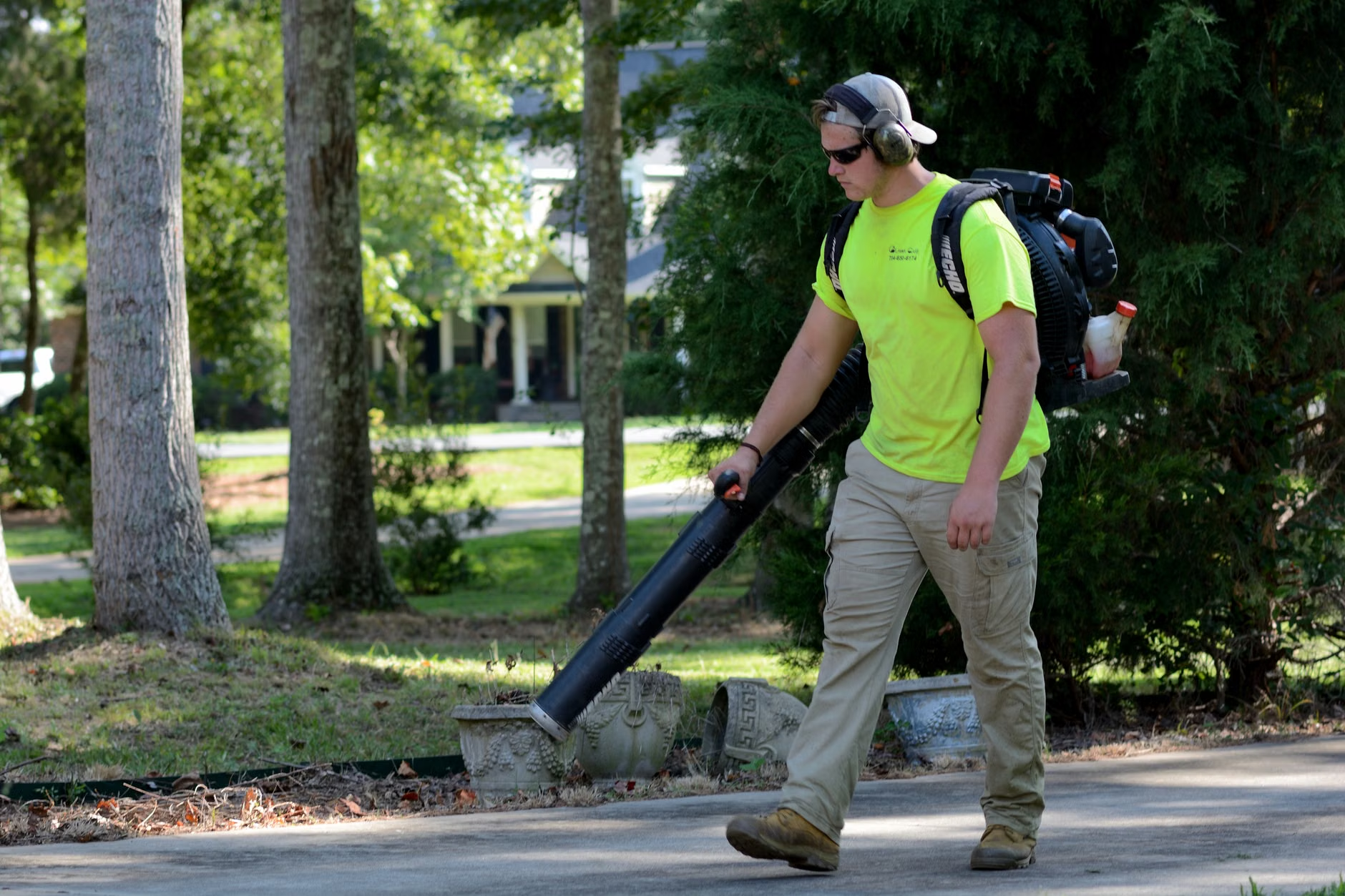
If the goal is near-term extra income, local service work is often the best place to start. Think yard cleanup, moving help, garage organization, dump-run coordination, simple furniture assembly, errand help, or event setup and teardown. These jobs solve immediate problems, and immediate problems tend to get paid for faster than abstract online promises.
This category works best for people who have some physical capacity, basic reliability, and either a vehicle, useful tools, or a local network. It also has a major advantage over many online side hustles: referrals happen naturally. One Saturday job can lead to another without rebuilding demand from scratch.
The downside is that local service work can look simple right up until it becomes risky. Anything involving ladders, electrical work, structural repairs, heavy hauling, or regulated trades deserves caution. Staying inside the line between “helpful side job” and “work you are not trained, insured, or licensed to do” matters.

Pet care and house sitting reward reliability more than aggressive marketing
For a lot of weekend workers, pet care is one of the best combinations of flexibility and repeat business. Weekend travel creates demand, and clients often prefer to rebook a sitter they trust rather than start over with someone new. That makes reliability, communication, and calm routines more valuable than clever sales copy.
This option is especially strong for people who are organized, comfortable around animals, and able to follow instructions carefully. It is less ideal for anyone with unpredictable housing rules, inconsistent availability, or a living situation that cannot safely handle overnight care or boarding.
The overlooked part of pet care is responsibility. Emergency contacts, medication routines, leash behavior, house access, and backup plans matter. In trust-based hustles, the product is not just time. It is peace of mind.

Event staffing offers cleaner boundaries than building your own client list
Weekend events create concentrated demand for staff. Catering shifts, venue setup, ticket scanning, banquet support, market help, and sports or festival work can be excellent for people who would rather show up, work the shift, and go home than market themselves to individual clients.
Another advantage is administrative simplicity. Many event roles are ordinary employment or temp work rather than self-booked freelance labor. That can mean fewer decisions about pricing, fewer client messages, and clearer boundaries around when work starts and stops. But classification matters. The Department of Labor says employee-versus-contractor status under the Fair Labor Standards Act turns on the economic reality of the relationship, not just what a contract calls it, and employees covered by the law receive minimum wage and overtime protections that independent contractors generally do not. (dol.gov)
The tradeoff is control. Event work can mean late nights, long stretches on your feet, seasonal swings, and schedules you do not set. It is a strong option for clean boundaries, not necessarily maximum autonomy.
Reselling works well only if you respect the hidden workload
Reselling deserves a spot on the list because it can be genuinely flexible. Sourcing can happen on weekends, listings can be batched, and the work scales gradually. It suits people who enjoy pricing, negotiation, cleaning up products, taking photos, and spotting value where other people see clutter.
It is also one of the easiest side hustles to romanticize. Gross sales are not profit. Storage is not free just because it is your garage. Time spent testing, cleaning, photographing, writing listings, packing, answering messages, and handling returns is part of the job whether it feels like it or not.
If reselling happens through online marketplaces or payment apps, tax paperwork can show up in ways beginners do not expect. The IRS says payment apps and online marketplaces generally issue Form 1099-K when payments for goods or services exceed $20,000 and 200 transactions, though a form can still be sent below that threshold. More important, taxable income still must be reported whether the form arrives or not. (irs.gov)

Freelance skill services have the best hourly upside, but usually the slowest first dollar
Editing, bookkeeping, design, presentation formatting, short-form video cleanup, research assistance, and administrative support can all become strong weekend side hustles. If the skill already exists, this category often offers the best long-term hourly economics because the main asset is expertise, not gear or inventory.
The catch is speed. Freelance work usually asks for proof before it asks for labor. Prospects want samples, clear offers, responsiveness, and confidence that the work will not create more problems than it solves. For someone starting from zero, local service work often produces money faster. For someone who already has a monetizable skill and even a modest network, freelance work can become the stronger long-term play.
Weekend freelance work is best when the offer is narrow. “I design things” is weak. “I clean up slide decks for Monday presentations” is much stronger. Tight offers reduce sales friction and make it easier for a client to say yes quickly.
Tutoring, lessons, and delivery driving can be good, but they are more conditional
Tutoring and lessons can be excellent if there is already clear credibility, such as a teachable subject, strong communication skills, and some local trust. Delivery driving or errand apps offer easier entry, but the real return depends on factors people often skip in casual side-hustle math: vehicle wear, fuel, parking, insurance considerations, and how much unpaid waiting is built into the shift. These are not bad options. They are just more sensitive to local conditions and personal constraints than internet lists often admit.
A realistic example of how to choose
Consider a hypothetical example. Say someone has a full-time weekday job, a small apartment, Saturdays mostly free, and a strong preference not to spend Sunday night answering messages or packaging orders. Reselling may look appealing, but limited storage immediately hurts the fit. Freelance creative work might pay better per hour, but only if there is already a portfolio or a warm network. Pet sitting or event staffing may score higher because the setup is lighter and the work ends more cleanly.
That is the point of choosing this way. The right weekend side hustle is not the one with the loudest online income claim. It is the one you can repeat for eight or ten weekends without dread, confusion, or a growing pile of Monday admin.
How to launch without turning it into a second full-time job
- Write down the real constraint set first: hours available, physical limits, vehicle access, storage space, housing rules, and how much weekday follow-up you can tolerate.
- Choose one primary hustle and one backup, not five experiments at once. A single clear offer is easier to test than a scattered list of services.
- Set your boundaries before the first booking: service area, minimum job size, cancellation terms, communication hours, and what you will not do.
- Create simple trust signals. That might mean a clean one-page service description, a straightforward profile, a few sample photos, or a concise list of exactly what is included.
- Run a three-weekend pilot. Track hours worked, money collected, travel time, supplies, stress level, and whether anyone asks to book again.
- At the end of the pilot, keep only what proves itself. Raise prices, narrow the offer, or switch categories if the effective return is too low.
This pilot approach matters because early side-hustle decisions are often distorted by novelty. A weekend that felt “productive” may have produced very little actual profit once travel, messaging, and cleanup are counted. Tracking the whole workflow reveals whether the idea is paying you or merely occupying you.
Do the boring admin early; it saves pain later
Keep records from the first paid weekend. The IRS says business records should clearly show gross receipts and should also support purchases and expenses with documents identifying the payee, amount, proof of payment, date, and a description of the item or service. (irs.gov)
Do not wait for a tax form to decide whether income counts. The IRS says gig-economy income must be reported even if it comes from part-time side work and even if no information return is issued. If payment apps or marketplaces are involved, a Form 1099-K may arrive depending on how you were paid, but taxable income does not start being taxable only when a form appears. (irs.gov)
If the side hustle starts producing meaningful untaxed income, estimated tax payments may come into the picture. IRS guidance says individuals generally consider estimated payments when they expect to owe at least $1,000 after withholding and credits. The standard due dates are April 15, June 15, September 15, and January 15, with shifts when those dates fall on weekends or legal holidays. (irs.gov)
On the business side, many one-person side hustles begin as sole proprietorships by default if no other entity is formed. The SBA notes that a sole proprietorship is easy to form but does not separate business and personal liability. An LLC can provide liability separation in many cases, but it also adds cost, paperwork, and state-specific rules. (sba.gov)

If a money-making opportunity asks for upfront fees, charges for “training” or “special access,” or pushes you to hand over sensitive personal information before real onboarding, back away. The FTC’s warning is simple: never pay money to earn money. (consumer.ftc.gov)
Mistakes that make a weekend hustle stop feeling flexible
- Buying equipment before validating demand. A side hustle should earn the right to become more expensive.
- Confusing gross revenue with usable profit. Travel, tools, packaging, subscriptions, and cleanup time count.
- Choosing a hustle that clashes with your actual energy. A physically punishing job can look good on paper and still be unsustainable after a full workweek.
- Underpricing in the name of “getting started.” Low prices often buy harder clients, not better momentum.
- Saying yes to work outside your competence or comfort zone. The fastest money is not worth avoidable safety or liability problems.
- Running several hustles at once too early. One clear offer with repeat customers usually beats five scattered experiments.
The common thread in these mistakes is poor fit. People often assume a side hustle failed because demand was weak, when the real problem was that the model did not match their schedule, personality, tools, or tolerance for admin. Fit is not a soft issue. It is an income issue.
The best weekend side hustle is the one you can repeat without resentment
For most readers, the smartest starting point is not the most glamorous option. It is the one with low setup friction, a clear service, manageable risk, and a realistic path to repeat work. In practice, that usually means local services, pet care, event staffing, reselling with discipline, or freelance skills that already exist.
Pick one, test it for three weekends, track the full cost of doing it, and be honest about the fit. That is how a weekend side hustle becomes useful extra money instead of another unfinished project.
FAQ
Do I need an LLC before I start a weekend side hustle?
Not necessarily. The SBA says a sole proprietorship is the default when one person does business activities without registering another structure. It is simple, but it does not separate business and personal liability. An LLC may offer liability separation, but it also adds filing obligations, fees, and state-specific rules. For a low-risk test, many people start simple and reassess once the work becomes steady. (sba.gov)
What if I never get a tax form from a platform or client?
That does not mean the income is ignored for tax purposes. The IRS says gig income must be reported even if it comes from side work and even if no information return is issued. A Form 1099-K may be sent in some payment-app or marketplace situations, but taxable income still must be reported whether the form arrives or not. (irs.gov)
Which weekend side hustles usually produce money the fastest?
For most people, local service work, pet care with an existing network, and event staffing are the fastest to validate. They solve immediate weekend problems and usually require less unpaid setup than content-based or portfolio-based hustles.
Should I try more than one side hustle at the same time?
Usually not at the start. One primary hustle and one backup is a better approach. It is easier to learn pricing, workflow, and real demand when the offer is clear. Too many simultaneous experiments create confusion and hide which one is actually working.
How do I know when a weekend side hustle is not worth keeping?
Three warning signs matter most: the effective hourly return stays low after expenses, the work creates too much Monday spillover, and nobody comes back for a repeat booking. If those problems still show up after a short test period and a few adjustments, switching is often smarter than grinding harder.
References
- Internal Revenue Service – Gig economy tax center – https://www.irs.gov/businesses/gig-economy-tax-center
- Internal Revenue Service – Understanding your Form 1099-K – https://www.irs.gov/businesses/understanding-your-form-1099-k
- Internal Revenue Service – Form 1099-K FAQs: What to do if you receive a Form 1099-K – https://www.irs.gov/newsroom/form-1099-k-faqs-what-to-do-if-you-receive-a-form-1099-k
- Internal Revenue Service – What kind of records should I keep – https://www.irs.gov/businesses/small-businesses-self-employed/what-kind-of-records-should-i-keep
- Internal Revenue Service – Estimated tax FAQs – https://www.irs.gov/faqs/estimated-tax
- U.S. Small Business Administration – Choose a business structure – https://www.sba.gov/business-guide/launch-your-business/choose-business-structure
- U.S. Department of Labor – Misclassification of Employees as Independent Contractors Under the FLSA – https://www.dol.gov/agencies/whd/flsa/misclassification?lang=ht
- U.S. Department of Labor – Fact Sheet #13: Employment Relationship Under the Fair Labor Standards Act (FLSA) – https://www.dol.gov/sites/dolgov/files/WHD/fact-sheets/whdfs13.pdf?1l030c1cb3h=
- Federal Trade Commission – Job and Money-Making Scams – https://consumer.ftc.gov/features/pass-it-on/job-and-money-making-scams
